Image Courtesy Of The Felder Report
One of the major themes I’ve been operating under for the past several years posits that, due to passive investing’s increasing popularity, opportunities outside of the major indexes should become both more prevalent and more attractive. In many respects, acting on this thesis has served me well.
This article was originally published by The Felder Report.
Recently, though, traditional passive investing has become a bit less popular as many investors have eagerly embraced alternatives or variations such as ESG and its most speculative elements like green energy and electric vehicles. Now there are a myriad different ways to define ESG but, in practice, it has resulted in portfolios with a higher concentration in popular sectors like tech and an underweight of unpopular sectors like the traditional energy sector.
In this way, ESG has merely served to magnify the momentum that passive index funds create when they allocate more new money to stocks and sectors with rising values, like tech and communications services, and less new money to those with falling values, namely energy. As a result, opportunities that run counter to these trends have become even more attractive than they otherwise would have.
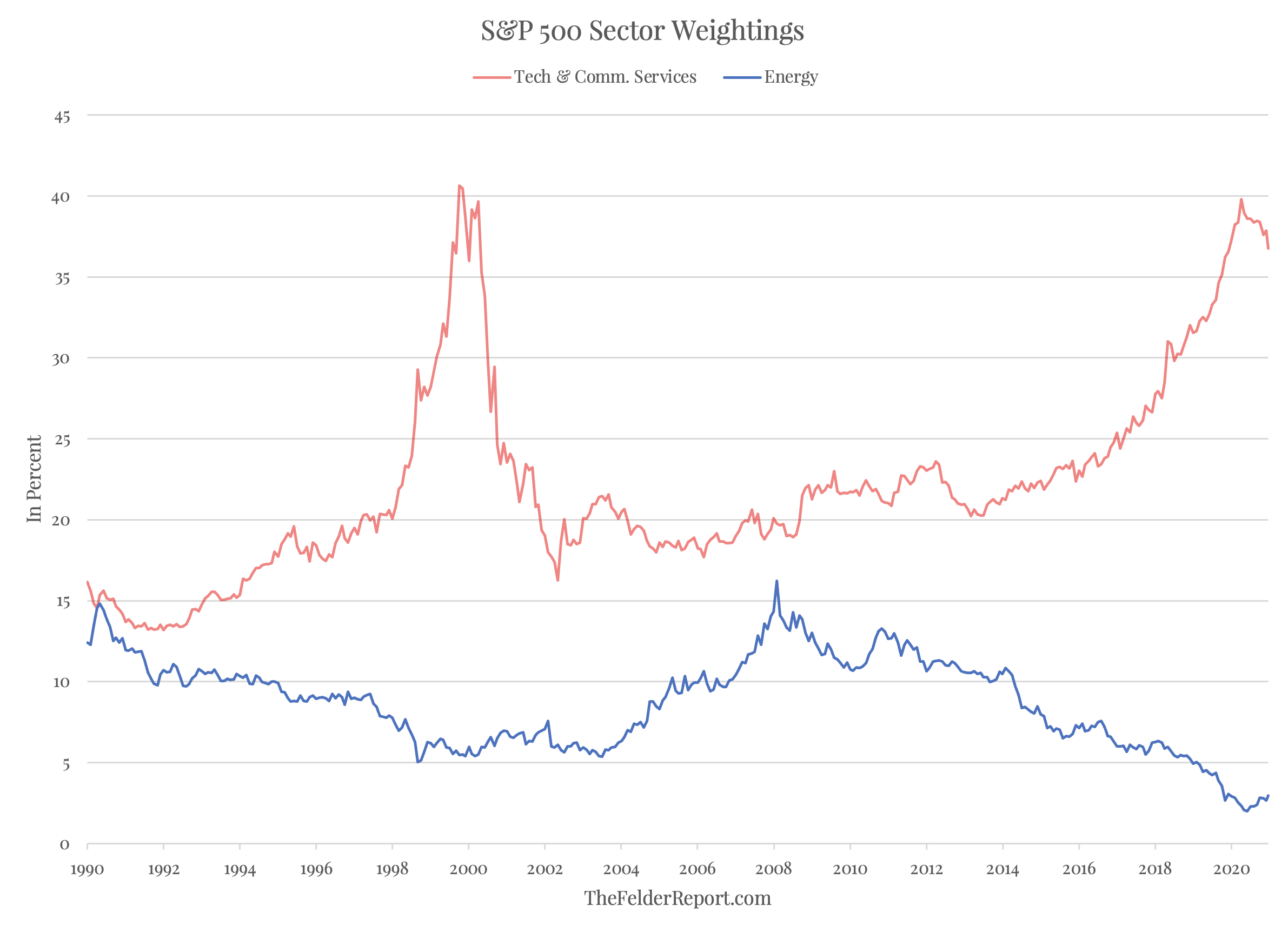
Since last fall, however, momentum has shifted and energy has begun to outperform tech and the rest of the stock market. As a result, many may be asking themselves whether this trend is sustainable. But when you look at the historical weighting within the S&P 500 Index, energy still comprises a smaller portion than it did 20 years ago, at the dawn of its last major bull market, and tech and communications services are just below their all-time highs set back then at the peak of the DotCom Mania.
So I would just ask in return, looking at the chart above, does it appear that energy has become overextended? Or is it more likely popular sectors like tech still have some give back ahead of them? For my money, those alligator jaws look more likely to snap shut than to open even wider, especially if record equity flows were to put in some sort of a major peak or, god forbid, even reverse course.
Ownership of AI and control of personal data are no longer abstract questions for techies… Read More
Faith institutions already own land and want to help address community needs — can this… Read More
The U.S. economy grew 2.1% in real terms in 2025, but that national figure tells… Read More
Much of the concern surrounding artificial intelligence is about power: the technology’s economic power to… Read More
Cuba fully restored its energy grid early Wednesday after the third nationwide blackout this year, but… Read More
Up until now, the politicization of AI models generally ran in one direction with US… Read More
This website uses cookies.