Image Courtesy Of Toni Osmundson On Unsplash
Corporate buybacks have become a hot topic, drawing criticism from regulators and policymakers. In recent years, Washington, D.C., has considered proposals to tax or limit them. Historically, buybacks were banned as a form of market manipulation, but in 1982, the SEC legalized open-market repurchases through Rule 10b-18. Although intended to offer companies flexibility in managing capital, buybacks have evolved into tools often serving executive interests over broader shareholder value.
This article was written by Lance Roberts and originally published by Real Investment Advice.
This article explores the mechanics of buybacks, how they impact markets, and whether they truly return capital to shareholders—or merely enrich insiders.
The Rise of Corporate Buybacks: By the Numbers
Since 2003, U.S. corporations have spent over $11 trillion on share repurchases. Corporate buyback activity has surged in recent years, even in volatile markets:
Introducing a 1% excise tax on corporate buybacks in 2023 has barely slowed the trend. Companies prioritize repurchases over reinvesting in business growth, raising wages, or developing new technologies. Apple and Meta, among others, regularly allocate billions toward buybacks, supporting their stock prices and meeting shareholder expectations.
How Buybacks Affect Markets
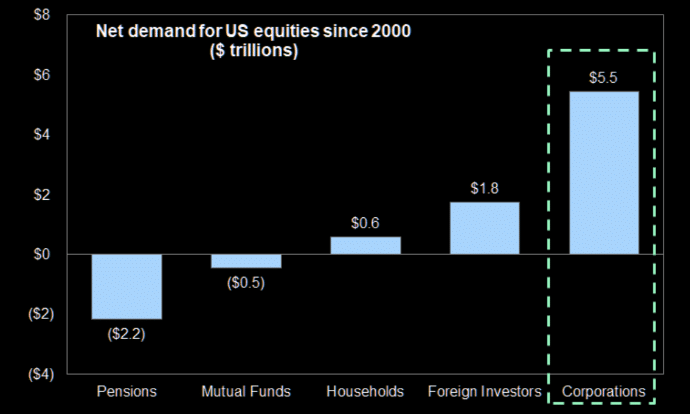
The impact of buybacks extends beyond individual companies. Since 2000, net corporate buybacks have accounted for 100% of the equity market’s net asset purchases—a reflection of the diminished participation from pensions, mutual funds, and individual investors:
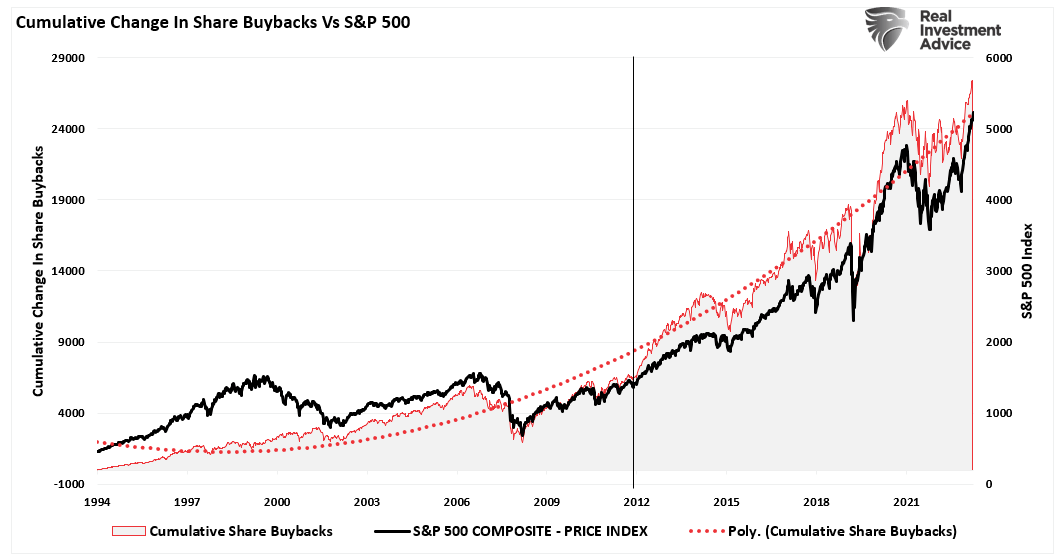
There are often statements made that corporate buybacks have only a limited impact on stock prices. However, the evidence is pretty overwhelming to the contrary since 2012, when corporations became very aggressive about buybacks.
This trend raises important concerns. While buybacks temporarily support share prices, they can crowd out investments in innovation, capital expenditures, and employee compensation, contributing to long-term economic stagnation and inequality.
Who Benefits Most from Stock Buybacks?
Many analysts argue that buybacks return excess capital to shareholders. However, the reality is more complicated. Buybacks primarily benefit insiders through carefully timed stock sales, inflated earnings metrics, and compensation triggers:
Despite these benefits to executives, the average shareholder sees little return unless they sell their shares during buyback periods. This creates an uneven distribution of profits, favoring insiders and short-term traders over long-term investors.
Companies often market corporate buybacks as a “return of capital to shareholders,” but this framing is somewhat misleading. Unlike dividends, which distribute cash to all shareholders equally, buybacks benefit those who sell their shares. As a result, buybacks:
A study from the Securities and Exchange Commission (SEC) found that executives often sell significant amounts of stock shortly after buybacks are announced, reinforcing the idea that buybacks serve insiders more than ordinary shareholders.
Alternatives to Buybacks: Real Ways to Return Capital
To promote sustainable growth and equitable returns, companies could shift their focus from buybacks to more transparent and shareholder-friendly strategies.
While corporate buybacks can support stock prices in the short term, they do little to enhance long-term business performance. Studies, including the Bank for International Settlements research, have shown that buybacks prioritize EPS manipulation over actual value creation. This emphasis on stock price gains discourages investment in productive assets and innovation, weakening companies’ ability to grow sustainably.
William Lazonick, in his seminal article “Profits Without Prosperity,” highlighted how stock buybacks divert corporate resources away from economic growth and into executive compensation. Between 2003 and 2012, S&P 500 companies allocated 54% of their earnings to buybacks and another 37% to dividends (91% of total earnings), leaving little for business expansion, wages, or job creation investments.
Conclusion: A Shift Away from Buybacks Is Necessary
While corporate buybacks are marketed as a “return of capital,” they primarily benefit insiders and short-term traders. Their rise reflects a broader shift in corporate priorities—from investing in growth and innovation to maximizing executive compensation through financial engineering.
To promote long-term shareholder value and economic prosperity, companies should adopt more transparent capital return strategies, such as tender offers and dividends. These methods distribute profits more equitably and encourage sustainable growth. A shift in focus could rebuild trust between corporations and shareholders, aligning business strategies with broader economic health.
The U.S. economy grew 2.1% in real terms in 2025, but that national figure tells… Read More
Much of the concern surrounding artificial intelligence is about power: the technology’s economic power to… Read More
Cuba fully restored its energy grid early Wednesday after the third nationwide blackout this year, but… Read More
Up until now, the politicization of AI models generally ran in one direction with US… Read More
Americans are increasingly reaching major life milestones later than previous generations, and parenthood is no… Read More
Sen. Scott Wiener requested the exemptions, and they exactly match his SB 145 legislation. Editors… Read More
This website uses cookies.