Image Courtesy Of The Felder Report
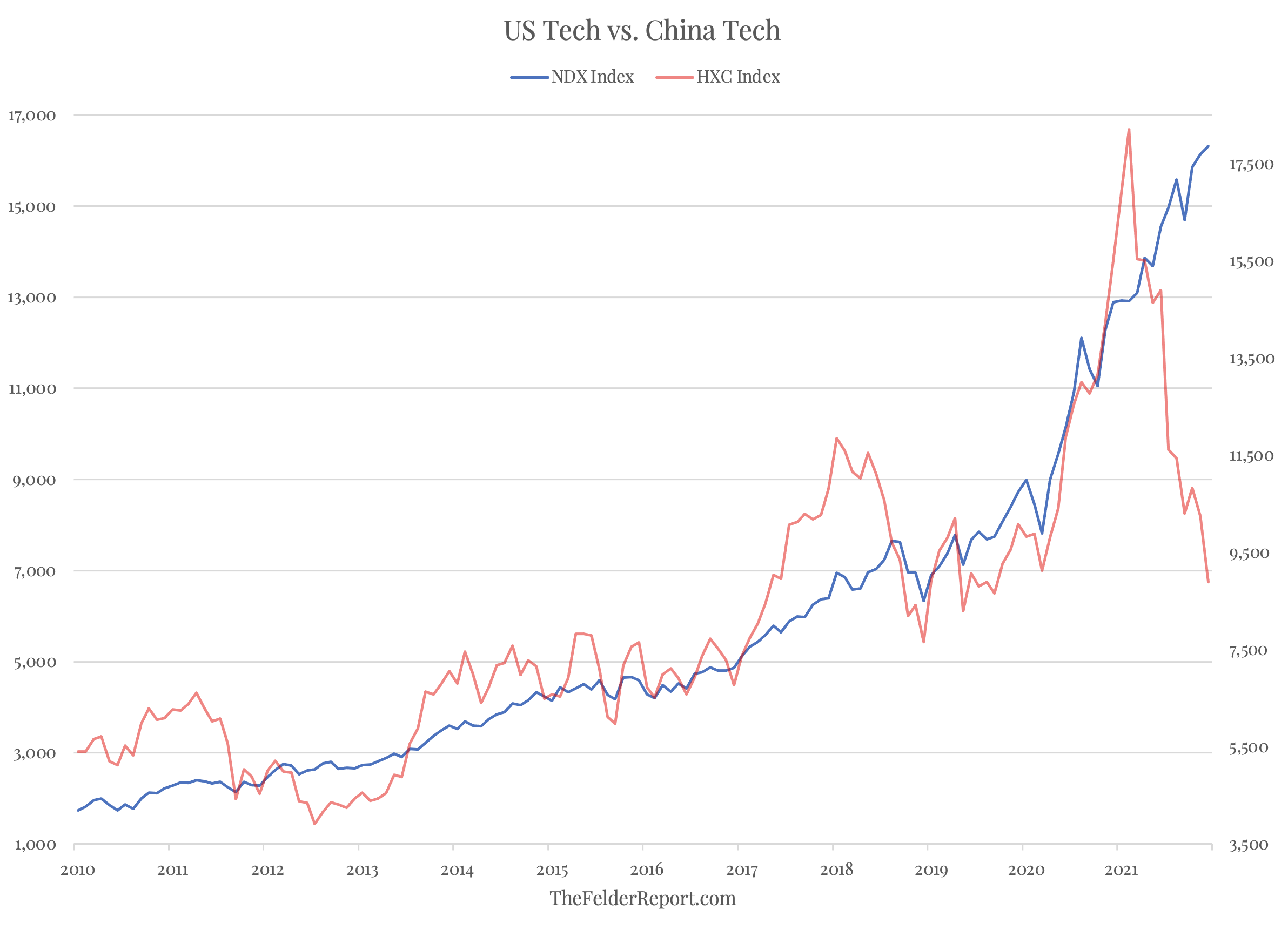
In a year filled with notable market phenomena, one of the more notable of 2021 was the dramatic divergence between US and Chinese tech stocks. While the former consistently surged to set new highs the latter crashed, giving back all of its gains since the onset of the pandemic and then some.
This article was originally published by The Felder Report.
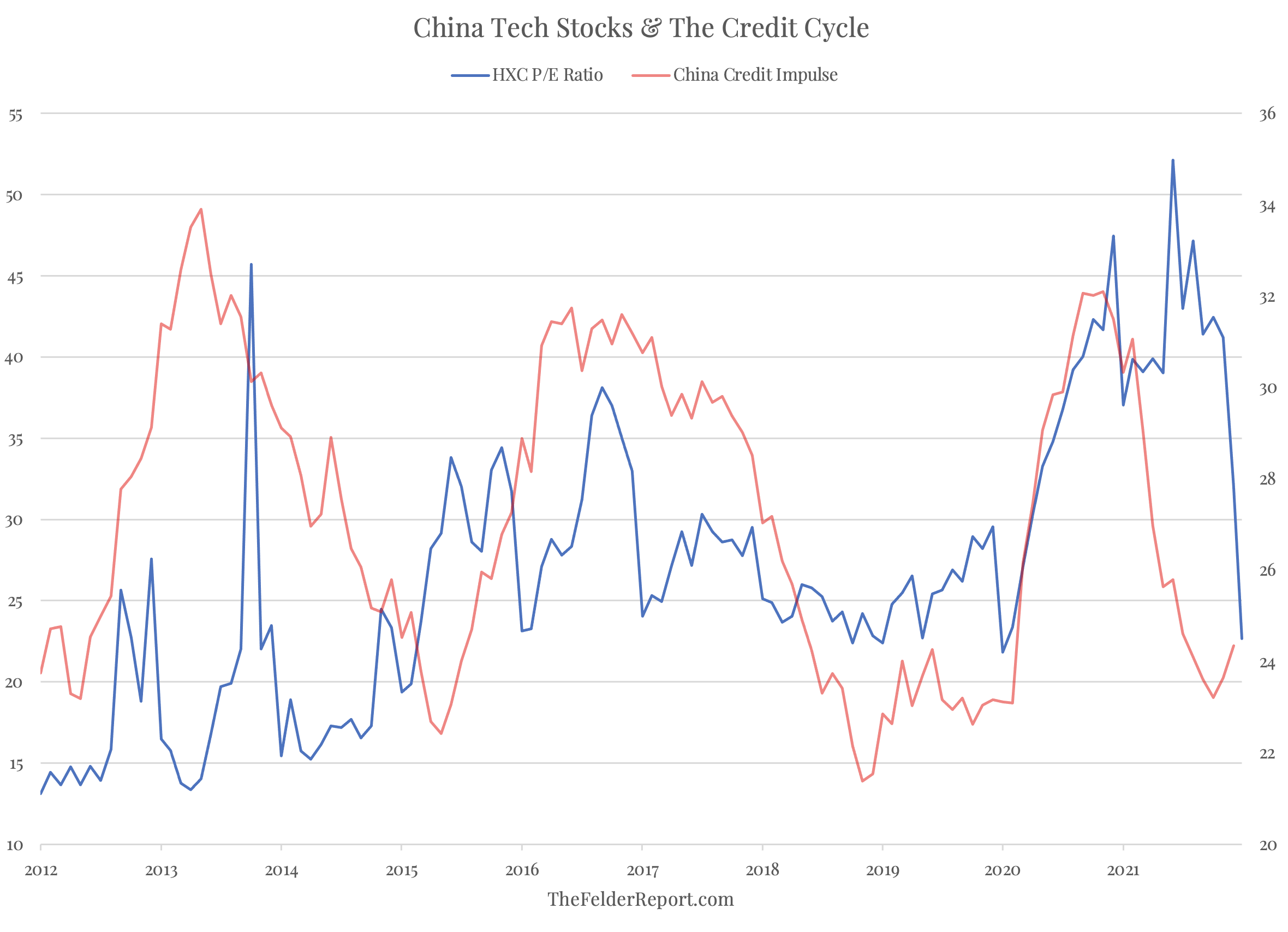
The popular reasoning for the crash in the Golden Dragon China Index (HXC) argues that the Chinese government crackdown on many internet-based businesses was responsible for a major reset in the valuations of the associated equities. While this may be true to some extent, it is also true that the downturn in the Chinese credit cycle may have played a major role, as well.
It is also true that there is now bipartisan support in Washington for a crackdown on Big Tech here in the US. Of course, it won’t look exactly the same as China’s crackdown but the impetus for both is very similar if not identical. However, just as for China’s tech stocks, a major shift in monetary policy may be even more ominous for the valuations of US tech stocks as represented by the Nasdaq 100 Index (NDX).
In fact, more than anything else the expected future direction of the Fed’s balance sheet may help to explain the recent weakness in the stock market which has been led by the tech sector. And if the Fed follows through with its “forward guidance” in this regard, the valuation reset in big tech stocks may be only just beginning.
Ownership of AI and control of personal data are no longer abstract questions for techies… Read More
Faith institutions already own land and want to help address community needs — can this… Read More
The U.S. economy grew 2.1% in real terms in 2025, but that national figure tells… Read More
Much of the concern surrounding artificial intelligence is about power: the technology’s economic power to… Read More
Cuba fully restored its energy grid early Wednesday after the third nationwide blackout this year, but… Read More
Up until now, the politicization of AI models generally ran in one direction with US… Read More
This website uses cookies.