Image Courtesy Of The Felder Report
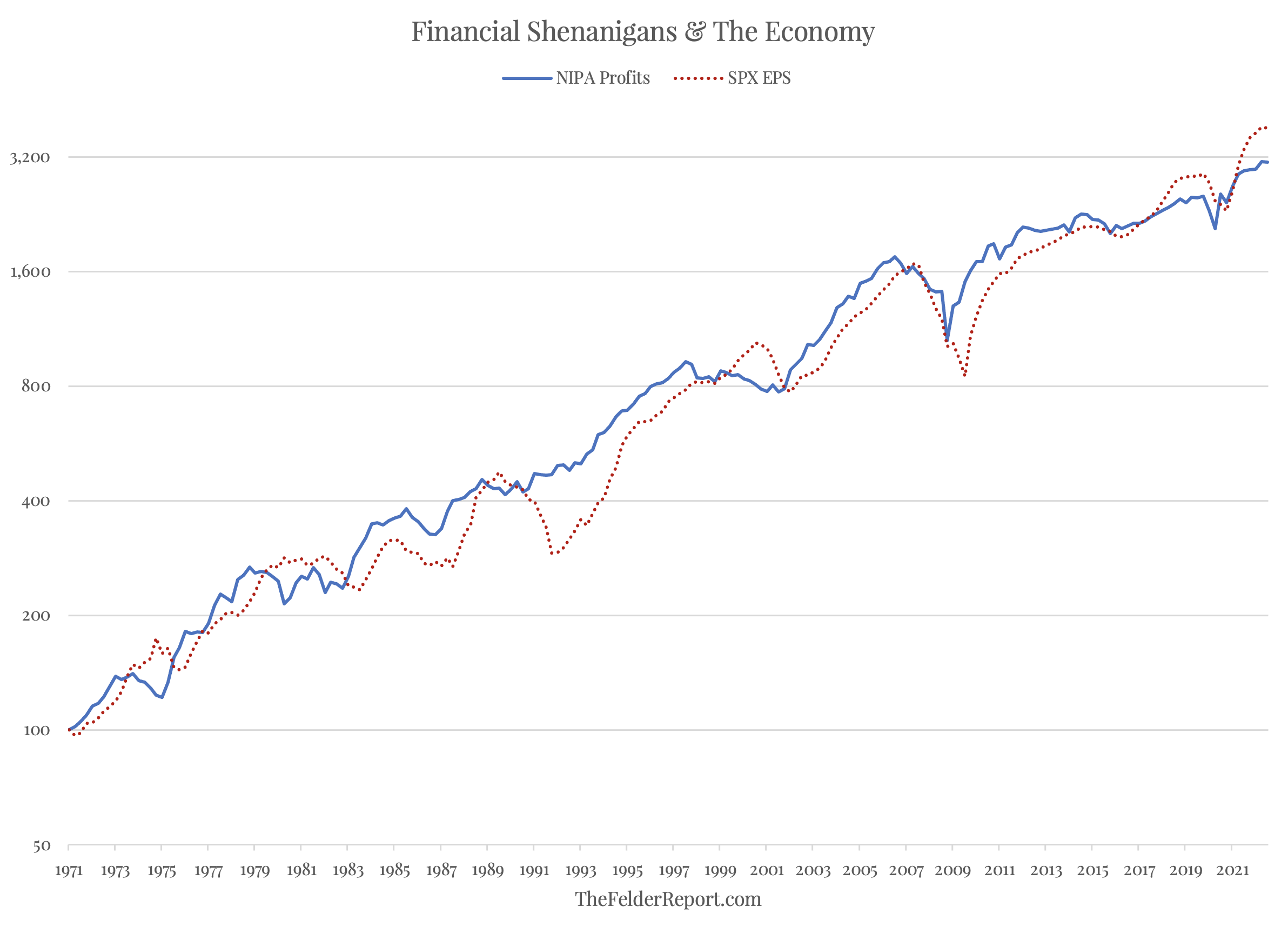
We have already seen an inordinate amount of outright fraud this cycle (see this and this) that has, so far, proven to be a terrific indicator of where we stand in the larger market cycle. Today, Bloomberg reports that earnings quality for the S&P 500 Index recently fell to its worst levels in at least three decades and this may be an important sign of where we stand in the larger economic cycle.
This article was originally published by The Felder Report.
The way they quantify “earnings quality” is to compare the aggregate net income of all companies in the index (ex-financials and energy) to aggregate cash flow. Normally, cash flow should be greater than earnings because it adds back non-cash charges like depreciation and amortization. When that is not the case it can be a red flag that companies are resorting to accounting gimmicks to make earnings look better than they otherwise would. By inference then, companies haven’t employed “financial shenanigans” (to borrow a term from CFRA Founder Howard Schilit) to inflate earnings as aggressively as they are doing today at any point in the past few decades.
Moreover, there are important economic implications from all of this. Gave continues, “Usually this means that the economy is on the brink of a recession, and that the stock market is about to take a beating.” Last year, we crossed that 20% threshold between S&P 500 earnings and NIPA profits. Perhaps we should add this to the growing list of leading indicators pointing to recession.
If you knew you were standing inside a stock market bubble, you wouldn’t be standing… Read More
A nationwide credit card outage in Japan disrupted shop payments, rail pass purchases and Mobile… Read More
Defense startup Neros has secured a US Army contract valued at up to $500 million… Read More
Ownership of AI and control of personal data are no longer abstract questions for techies… Read More
Faith institutions already own land and want to help address community needs — can this… Read More
The U.S. economy grew 2.1% in real terms in 2025, but that national figure tells… Read More
This website uses cookies.