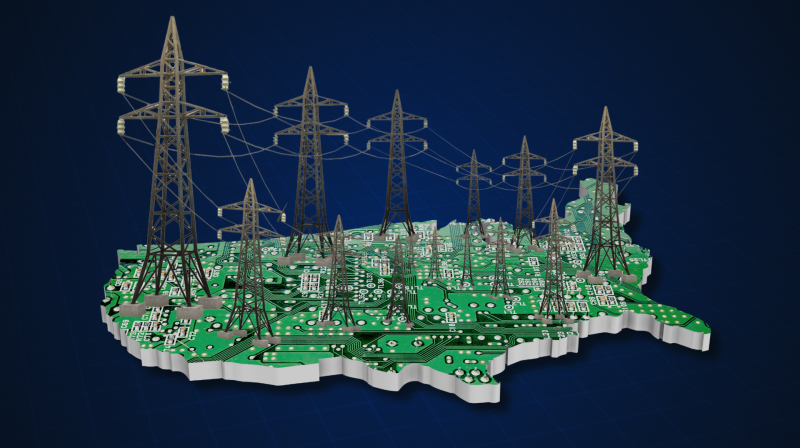

Ownership of AI and control of personal data are no longer abstract questions for techies alone. They are issues that affect every citizen, business, and government, because whoever owns the infrastructure and the data effectively determines how knowledge itself is used to run society.
This article examines who currently owns and funds AI, how personal data fuels these systems, how AI is being used today, and why alternative models—such as cooperatives, personal data vaults, and local AI hardware—may be essential if a more human-centered future is to develop.
Why ownership matters
AI systems are hungry for data, and much of that data comes from ordinary people through searches, clicks, purchases, GPS traces, communications, and biometric signals. Yet legal and policy experts note that in most jurisdictions, data is not owned in the same way a person owns land, a vehicle, or inventory; instead, rights over data are fragmented across privacy law, contracts, and intellectual property agreements.
Lothar Determann is an attorney and teacher of data privacy and intellectual property law. He states that “No one owns data,” arguing that societies are helped more by governing access and use rather than creating simple property rights in data. At the same time, Brittany Kaiser and other critics of data exploitation argue that institutions control vast datasets of human behavior, psychology, and social patterns. Without impactful legal and financial accountability, those datasets can be used for the manipulation of others.
That is why the real question is broader than who owns an AI company. The deeper issue is who sets the rules for how digital intelligence works, who captures the value it creates, and who bears the risks when AI systems hurt people or organizations.
Who owns today’s AI platforms
The largest AI systems today are largely owned by global technology companies and well-funded startups backed by venture capital and giant cloud infrastructure companies such as Amazon Web Services (AWS), Microsoft Azure, and Google Cloud. These organizations control the major general-purpose models used for chat, coding, search, enterprise automation, and multimodal applications, while also selling AI as infrastructure through cloud platforms.
This ownership structure creates a natural incentive to centralize all processing, data storage, and decision-making into a single system. This type of ownership also keeps models proprietary, and monetize user interaction through subscriptions, enterprise licensing, or indirect means such as personalization and ad optimization. George Gilder, a well-respected investor, author, and economist, has described this wider digital economy as one in which information becomes the dominant form of capital and major platforms function as data landlords, extracting value by controlling the gateways through which information flows.
A smaller but important counter movement is emerging in the form of public-interest AI projects, nonprofit initiatives, open research communities, and cooperative models. Reports on cooperative AI argue that public utilities, multi-stakeholder governance systems, and user-owned platforms may better partner AI with public benefit, even though they face difficult funding and growth obstacles.
Who funds AI and why funding shapes ownership
The modern AI boom has been financed mainly through venture capital, large technology firms, and government or defense funding. Venture investors seek companies that can dominate markets and generate huge financial returns, while large cloud providers invest strategically to ensure that AI adoption attracts big clients to their infrastructure and ecosystems.
Government funding adds another layer, especially where AI intersects with intelligence, national security, surveillance, and technology that can be used for both military and civilian purposes. The Brookings Institution and other sources note that the largest organizations are also the fastest adopters of AI, partly because they have the resources to integrate new tools into operations at scale.
This funding environment creates these biases. It tends to direct AI development toward enterprise productivity, consumer analytics, cybersecurity, and security applications, rather than toward slower-growing cooperative or civic models. Platform cooperatives face the structural problem that they need capital-intensive infrastructure while also trying to preserve democratic governance, which does not fit well with typical venture capital investors.
How AI uses your data now
For most people, AI appears as invisible software embedded in daily systems. It shows up in spam filters, search ranking, recommendation engines, customer service bots, fraud detection tools, virtual assistants, and workplace automation.
Several business and consumer surveys suggest that customer service is among the most common enterprise uses of AI, followed closely by cybersecurity and fraud management. Other research shows that a large share of generative AI users now use it for search, browsing, writing, summarization, and creative tasks, making AI a direct interactive tool for information access and productivity.
A reasonable estimate of AI performance today presumes the largest share in customer-use and workplace systems such as chatbots, recommendations, and assistants, followed by enterprise analytics and optimization, then security and surveillance uses, and finally gaming and niche creative applications. These categories overlap, but the pattern is clear that a major portion of AI is used not just to help people, but to monitor, predict, influence, and optimize human behavior.
The dark side of data
The Cambridge Analytica scandal remains one of the clearest examples of how data and machine learning can be combined to influence opinion and behavior at a massive level. Brittany Kaiser’s work emphasizes that the danger is not merely collection, but the creation of psychological and behavioral profiles that can be used to shape consumer decisions and public perception.
This concern extends beyond elections. AI-enhanced surveillance is expanding in corporate security, fraud detection, workplace monitoring, law enforcement, and intelligence settings, often faster than public oversight can keep up. The result is a widening gap between the sophistication of systems that observe people and the rights people must understand or challenge those systems.
Regulation and the legal complexity of “owning data”
Governments are now trying to address AI more directly, but the approaches differ widely. The European Union has taken the broadest route through comprehensive AI regulation based on risk categories, while the United States has relied more heavily on sector-specific law, agency guidance, and existing consumer protection and anti-discrimination frameworks.
Privacy laws such as the GDPR (General Data Protection Regulation) and California’s CCPA (California Consumer Protection Act) give individuals certain rights over their data, including access, correction, and in some cases deletion, but they still do not create a simple property right in personal data. That is one reason the slogan “own your data” is appealing but legally incomplete, because what people often want is not literal ownership so much as enforceable control over access, use, transfer, and deletion.
The American Action Forum argues that creating a property framework for data could impose high economic and legal costs while also creating new restrictions on information flow and innovation. Lothar Determann’s position is similar in spirit. He states that stronger, clearer rights of use and access may be more practical than trying to force data into the status of traditional property.
Alternative architectures: pods, vaults, co-ops, and local AI
One important alternative is the personal data pod or vault model, associated most prominently with Tim Berners-Lee’s Solid Project. Berners-Lee’ is the inventor of the World Wide Web and the creator of key web technologies like HTML, HTTP, and URLs. His Solid Project, instead of scattering copies of personal information across hundreds of services, allows a user to store data in a secure pod and grants controlled access to applications as needed. This application can reduce duplication, improve portability, and make user control more realistic in practice.
Another alternative is cooperative or public-interest AI, where governance and benefits are broadly shared. Cooperative AI frameworks propose multi-stakeholder governance, community participation, and shared returns, especially in areas like health, education, local services, or data commons.
A third and increasingly important alternative is local AI hardware. Devices such as the NVIDIA Jetson Orin Nano Super are built for edge AI, They run language and vision models locally, close to where data is generated. NVIDIA states that running models locally on Jetson provides “complete privacy and zero network latency,” because prompts, code, notes, and camera feeds can stay on the device rather than being sent to a software connection (API) between computers or between computer programs.
That does not mean a small device replaces huge cloud AI in every situation. Jetson-class systems are best suited to smaller, more efficient open-source models, specialized assistants, local coding help, multimodal monitoring, and early-stage robotics or embedded applications. But their importance lies in the fact that they make possible a practical reduction in dependence on centralized data centers for many everyday AI tasks.
This changes the ownership discussion. When AI runs locally, more of the computation, more of the logs, and more of the context can remain under the control of the individual, household, or organization using it. Local AI can also integrate naturally with personal data pods and cooperative data models, creating architectures where sensitive information is processed at the edge and only selective outputs are shared externally.
Who should own AI and your data
There is no single ownership formula that fits every layer of AI, but several principles stand out.
First, individuals should have strong, enforceable rights over how personal data is collected, used, transferred, and deleted, even if that does not amount to literal property ownership.
Second, the infrastructure of AI should not be controlled by only a few firms, because concentrated control over data and intelligence creates serious economic, political, and ethical risks.
Third, alternative ownership structures deserve significant investment, not just admiration. Cooperative AI, public-interest infrastructure, personal data vaults, and local AI hardware all offer practical ways to spread power more widely.
Fourth, transparency and accountability should be treated as core design features, so that users can understand how systems use their data and how decisions are made.
A healthier future would combine privacy rights, technical architectures that preserve control, and economic models that let individuals and communities benefit from the value their data helps create.
Core citations for this article
Data ownership and privacy law
• American Action Forum, “The Law & Economics of ‘Owning Your Data’”
https://www.americanactionforum.org/insight/law-economics-owning-data/
• Lothar Determann, “No One Owns Data”
https://www.bakermckenzie.com/-/media/files/people/lothar-determann/no-one-owns-data-hlj-2018.pdf
Personal data pods and user control
• BBC, “Your personal data all over the web – is there a better way?”
https://www.bbc.com/news/business-68286395
Cooperative and public-interest AI
• Harvard Ash Center, “Cooperative Paradigms for Artificial Intelligence”
• Platform.coop, “AI for Co-op Financing?”
• Own Your Data Foundation
AI adoption and usage patterns
• AIPRM, “AI Statistics 2024”
https://www.aiprm.com/ai-statistics/
• Exploding Topics, “How Many Companies Use AI?”
https://explodingtopics.com/blog/companies-using-ai
• National University, “131 AI Statistics and Trends for 2026”
https://www.nu.edu/blog/ai-statistics-trends/
• Brookings, “How are Americans using AI?”
Local AI and edge hardware
• NVIDIA Developer Blog, “Getting Started with Edge AI on NVIDIA Jetson”
Getting Started with Edge AI on NVIDIA Jetson: LLMs, VLMs, and Foundation Models for Robotics